
The Needy Ones
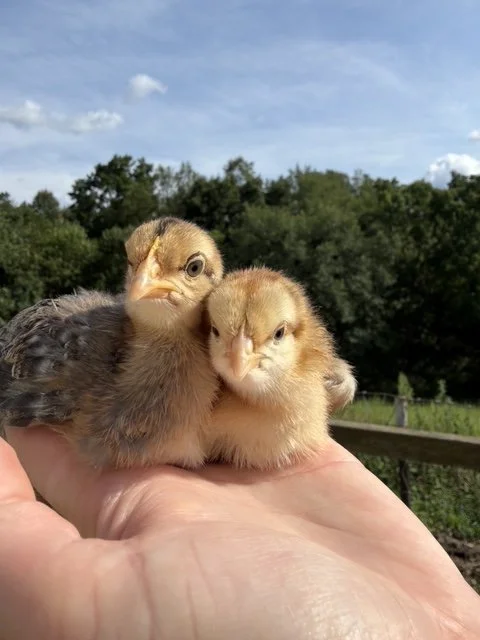
All the Chicks
Every year, we take in hundreds of chicks — and no two stories are ever quite the same.

They come to us from feed stores, hatcheries, private homes, law enforcement cases, as strays, and from people who simply don't know where else to turn. Some arrive sick. Some arrive injured. And far too often, they arrive both.

We've seen broken legs, deep lacerations, slipped tendons, mites, eye ulcers, conjunctivitis, mineral deficiencies, deformities, and so many other conditions that these tiny babies should never have to endure.

But when they arrive here, their story changes.

Our team works tirelessly to give these fragile little lives a second chance. They receive the medical care, rehabilitation, nutrition, and attention they need to heal and grow. Some need weeks of treatment. Others need months. And some will always have special needs because of the way they came to us.

The most heartbreaking part is knowing that many of these babies may never have been given a chance without rescue.

We watch them come through our doors scared, sick, injured, and struggling — and then we watch them transform. We see them take their first healthy steps, learn to eat on their own, grow their feathers, discover the sunshine, and finally become the happy, curious little birds they were always meant to be.

Once they are healthy and cleared, they are available for adoption into loving homes. And if they don't find that special family, that's okay. They have a home here for as long as they need one.

There is something incredibly rewarding about watching a tiny, broken chick become a strong, healthy bird. Every healed leg, every recovered eye, every little milestone reminds us why we do what we do.

They may start their lives as the ones nobody wanted, but here, they are wanted. They are cared for. And they are loved.

And that's what rescue is all about.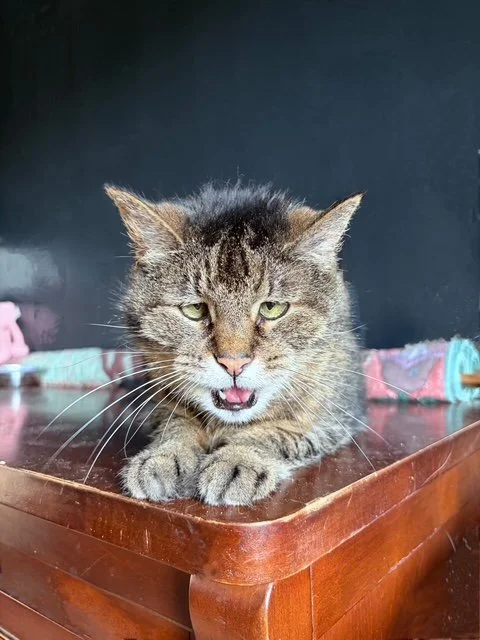
Blossom
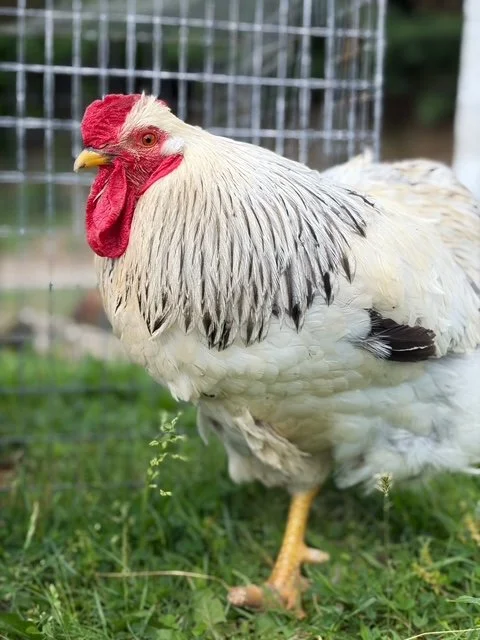
Big Cat
⚠️ TRIGGER WARNING — Big Cat’s story contains descriptions of severe injury, neglect, and trauma.

Some animals come to us needing a little help. And then there are animals like Big Cat — animals who arrive having endured more suffering in a single day than we could ever imagine.

Big Cat was found trapped in a metal railing during the brutal stretch of subzero temperatures we experienced last winter. He had apparently been attacked while he was trapped, leaving him dangling, severely injured, and covered in blood. When his family came home, they initially believed he was already dead. It wasn't until they began trying to forcefully remove him from the railing that they realized he was still alive.

But his ordeal didn't end there. He was left in a garage overnight, presumably to die. By morning, somehow, Big Cat was still hanging on.

Instead of getting him the help he desperately needed, he was placed in a blood-soaked cardboard box and brought to our gate in an attempt to leave him there unnoticed. Thankfully, someone was here to intercept them. It was -6°F outside.

Big Cat was hypothermic, severely injured, badly frostbitten, and his entire face was covered in dried blood. He was barely responsive. He would not have survived much longer outside.

We honestly didn't know if he would make it through the night. But he was alive, and as long as Big Cat was fighting, we were going to fight right alongside him.

We slowly warmed him, carefully bringing his body temperature back to normal while trying not to push his already traumatized body too far. After everything he had endured, the fact that he was still alive told us something important:
Big Cat wasn't ready to give up.

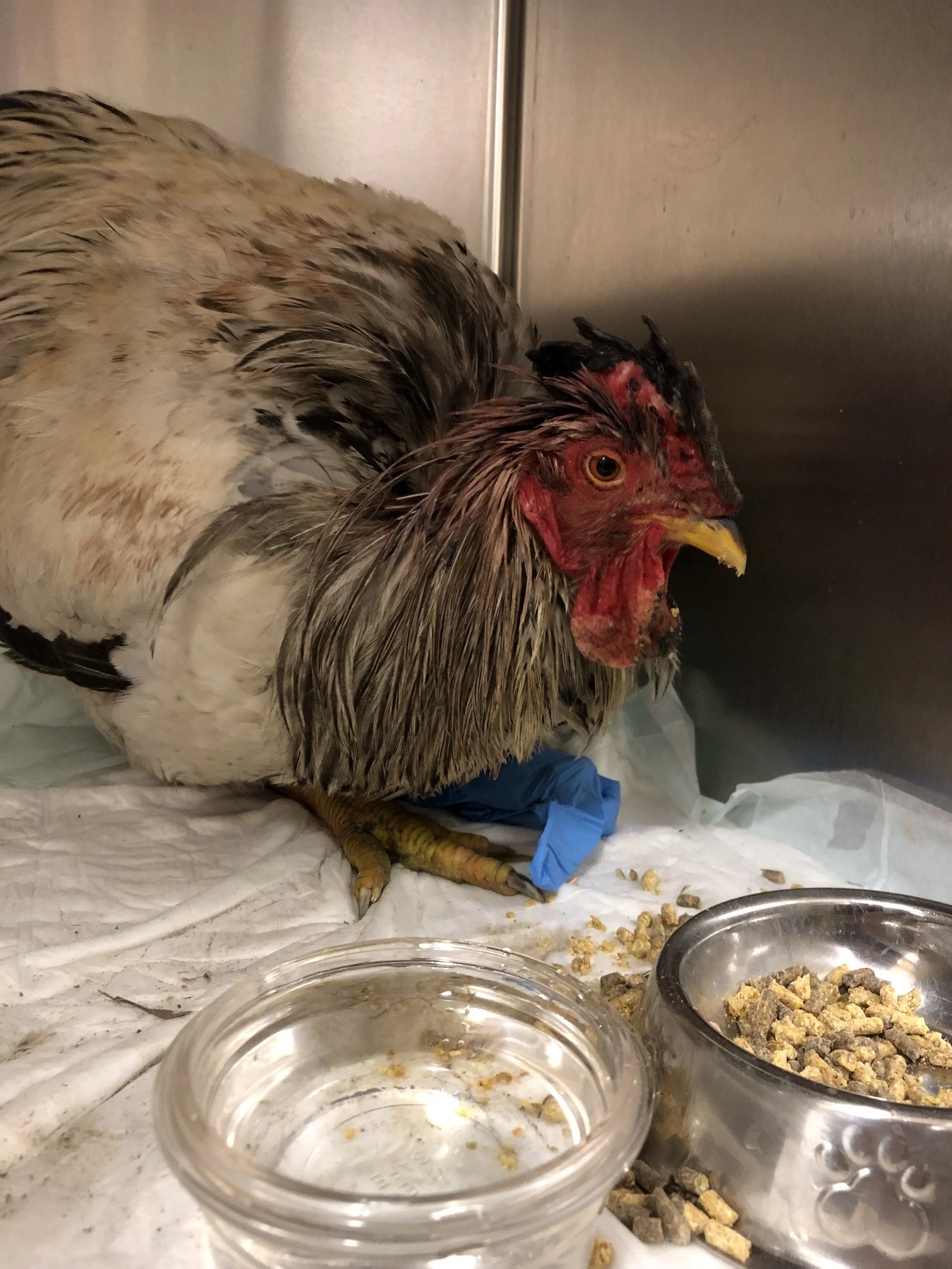
After a day of stabilization and gently removing the blood from his face and neck, we were finally able to get him to our veterinarian. His prognosis was extremely guarded. He had a severely compromised leg, a severed comb, and extensive frostbite. And then we discovered something else — the neglect hadn't started with this horrific incident.

Big Cat was emaciated and absolutely covered in parasites. Mites, lice, and worms had taken advantage of his weakened condition. For weeks, it was touch and go. Medication after medication. Treatment after treatment. Bandage changes. Baths. Surgeries. And through it all, Big Cat remained unbelievably calm. He allowed us to care for him. He sat quietly through treatments and trusted us to handle his wounds. Somehow, after everything humans had put him through, he still found a way to trust that the humans caring for him now were there to help.

Eventually, the damaged tissue in his leg could no longer be saved. After multiple procedures to remove the necrotic tissue, Big Cat was finally cleared for amputation.

And then came the news we'd been waiting for:

His surgery was successful. ❤️

The very next day, Big Cat started fighting us during his treatments. And we couldn't have been happier. Because that fight meant he was feeling better. It meant our Big Cat was coming back. His road to recovery was long, but today, he is thriving.

Life with one leg isn't always easy. Big Cat needs secure areas to roam, customized accommodations that allow him to move comfortably, and special wraps to support his remaining leg. He's definitely a high-maintenance gentleman. But Big Cat doesn't let any of that slow him down. These days, you'll often find him sunbathing, enjoying his days, and — perhaps most unexpectedly — babysitting.

Once our chicks are old enough to transition outdoors, Big Cat helps raise them. Think about that for a moment. A bird who was once left outside to die in -6°F weather now spends his days helping care for babies. After all the ways humans failed him, Big Cat still chooses to be gentle. He is still one of the sweetest birds on our farm. He should have died that night. He should have given up. But he didn't. And we are so incredibly grateful that he didn't. Big Cat survived the cold. He survived his injuries. He survived the neglect. He survived the surgeries. He survived everything that was done to him.

And now, he gets to simply live. He gets sunshine. He gets safety. He gets care. He gets love. And most importantly, he knows that this time, he is finally home. ❤️

Big Cat's story is a reminder that sometimes, the animals who have been failed the most are the ones who have the most love left to give.

We couldn't change what happened to him. But we could change what happened next. And for the rest of his life, that's exactly what we'll do.
Blossom came to us as a senior, and somehow, two years later, this sweet old girl is still going strong.
Now in her late teens, Blossom requires more specialized care as her little body continues to age. She is very arthritic, has a crooked spine, bad hips, and those unmistakable crossed eyes that make her even more endearing. Despite everything she has been through, Blossom has done remarkably well in our care.
Her story is a heartbreaking one. Blossom was found as a stray when she showed up at the home of an elderly couple. We believe she may have been hit by a car at some point, leaving her with many of the injuries and physical challenges she carries today. We can only imagine what her life looked like before she found her way to safety.
But these days, Blossom doesn't have to worry about any of that.
She has her very own room, filled with cozy perches and sunny spots where she can spend her days basking in the warmth. Because her arthritis makes grooming difficult, she gets daily grooming and weekly baths — and, thankfully, she tolerates all of it like the little trooper she is.
Blossom may not have had the easy life she deserved, but she is finally surrounded by people who love her and make sure she is comfortable. She will spend the rest of her life here with us, and we couldn't be happier to spoil her rotten for however much time she has left.
After everything this old girl has endured, she deserves nothing less than a life filled with warmth, comfort, sunshine, and love. And that is exactly what we're going to give her.
Sweet Blossom, you are safe now. You are loved. And you will never be alone again.And that is rescue.

Consider donating to help the animals
Monetary donations are used for veterinary costs, feed and hay, and bedding.